7 Transport Decisions That Can Be Automated Safely
Discover 7 transport decisions that can be safely automated, from driver assignment and vehicle allocation to reminders, route adjustments, and exception management.
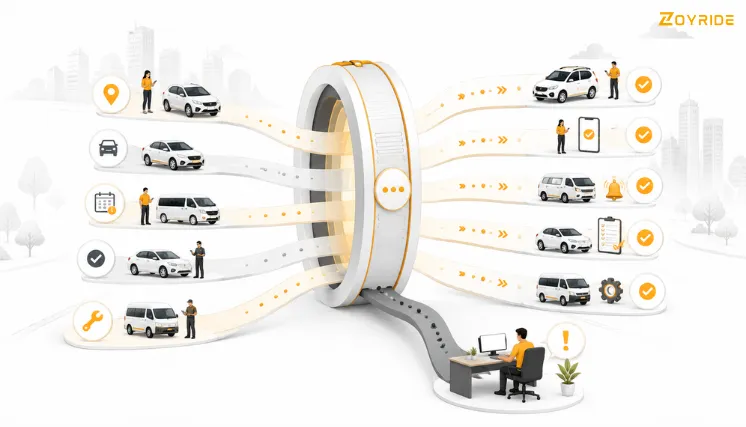
In transport operations, automation is often associated with removing manual work. But the bigger opportunity is not simply doing tasks faster. It is allowing systems to make routine operational decisions consistently, while keeping people in control when judgment is actually required.
A dispatcher deciding which available driver should receive a booking, a transport manager checking whether a vehicle has enough capacity, or an operations team reviewing tomorrow’s schedule may all be making decisions that follow the same rules repeatedly.
These are strong candidates for automation.
The important distinction is that not every transport decision should be automated. Decisions involving safety, exceptions, unusual customer situations, or conflicting operational priorities may still require human review.
The goal of transport automation is therefore not to replace operational judgment. It is to automate predictable decisions and give transport teams better information when human intervention is needed.
What Makes a Transport Decision Safe to Automate?
Before automating a decision, transport operators should ask four questions:
- Is there a clear rule or set of conditions?
- Is reliable data available to make the decision?
- Can the decision be reversed or adjusted?
- Is there a clear escalation path when something unusual happens?
If the answer is yes, the decision is usually a good candidate for automation.
For example, assigning an available driver based on proximity, vehicle type, and availability can follow predefined rules. Deciding how to handle a passenger in an unusual emergency situation should remain with an experienced team member.
With that distinction in mind, here are seven transport decisions that can often be automated safely.
1. Which Driver Should Receive the Next Trip?
Driver assignment is one of the most repetitive decisions in daily transport operations.
A dispatcher may need to consider:
- Driver availability
- Distance from pickup
- Current trip status
- Vehicle type
- Driver shift
- Service area
- Scheduled bookings
Doing this manually for every booking becomes difficult as trip volume increases.
An automated dispatch system can evaluate these conditions within seconds and recommend or assign the most suitable available driver.
This reduces unnecessary manual coordination while helping dispatch teams respond faster to new bookings.
Where human judgment still matters
Dispatchers should be able to intervene when a booking has special requirements, a driver reports an issue, or normal assignment rules do not apply.
2. Which Vehicle Should Be Assigned?
The closest vehicle isn’t always the right vehicle.
A passenger may require a larger vehicle, accessible transportation, additional luggage capacity, or a particular service category.
Automation can evaluate vehicle availability alongside trip requirements and assign an appropriate vehicle automatically.
This helps prevent situations where:
- The wrong vehicle is dispatched
- Larger vehicles are unnecessarily used for small trips
- Suitable vehicles remain idle while others are overused
For growing fleets, automated vehicle allocation can make capacity management considerably easier.
3. When Should a Reminder Be Sent?
Transport teams don’t need to manually decide when every passenger should receive a trip reminder.
A booking system can automatically trigger notifications based on predefined conditions.
For example:
Booking confirmed → reminder scheduled → passenger notified → trip begins
Automated reminders can help reduce forgotten bookings, improve passenger preparedness, and reduce unnecessary waiting at pickup locations.
The important part is that the timing and communication rules are defined in advance rather than decided manually for every booking.
4. When Should a Route Be Adjusted?
Routes often need to change because of traffic, demand, road conditions, or changes in passenger bookings.
A transport platform can use available trip and location data to identify situations where a route needs adjustment.
For scheduled transport, automation can consider:
- Confirmed bookings
- Pickup locations
- Vehicle capacity
- Travel time
- Traffic conditions
- Driver availability
This is particularly useful for employee transport and shuttle operations, where daily demand can vary.
However, route automation should operate within defined boundaries. Major changes that could affect service commitments may still require dispatcher approval.
5. Which Vehicle Should Handle a New Demand Area?
Demand isn’t distributed evenly throughout the day.
One zone may suddenly receive several bookings while vehicles remain available in another area.
Instead of waiting for a dispatcher to notice the imbalance, an automated system can identify demand changes and recommend repositioning available vehicles.
This can help transport operators:
- Reduce response times
- Improve area coverage
- Reduce empty vehicle movement
- Make better use of available capacity
For larger fleets, this type of automation becomes especially valuable because monitoring every zone manually is difficult.
6. When Should a Vehicle Be Removed From Service?
Some operational decisions should be automated because delaying them can create safety or compliance risks.
For example, a system can flag vehicles when:
- Required documents expire
- Scheduled maintenance is due
- Inspection deadlines are approaching
- A vehicle is marked unavailable
- Certain operational conditions are not met
Rather than relying on a spreadsheet or someone’s memory, the system can automatically prevent or restrict assignments when predefined requirements aren’t satisfied.
The final compliance decision can remain under the appropriate manager’s control, but the system ensures important conditions aren’t overlooked.
7. Which Trips Need Attention From the Operations Team?
Not every trip needs human monitoring.
If a system can identify normal trips automatically, operations teams can focus their attention on exceptions.
For example, the platform can flag:
- Delayed pickups
- Route deviations
- Unassigned trips
- Driver cancellations
- Vehicle breakdowns
- Unusual trip durations
- Repeated service failures
This creates an exception-based workflow.
Instead of asking dispatchers to monitor every trip continuously, the system brings the unusual situations to their attention.
That is one of the most useful forms of automation because it doesn’t remove human oversight—it directs it where it matters most.
What Should You Not Automate Completely?
Automation works best when there are clear rules and reliable data.
Some decisions should therefore remain human-led, particularly when they involve:
- Safety emergencies
- Complex customer complaints
- Driver disputes
- Major service disruptions
- Exceptional accessibility requirements
- Regulatory interpretation
- Unusual incidents
The better approach is often automation with human oversight.
The system handles predictable decisions. The operations team handles exceptions.
Automation Should Follow Rules, Not Replace Them
A common mistake is implementing automation before defining the operational rules behind it.
For example, before automating driver assignment, an operator should establish:
Who is eligible?
Which drivers can receive this type of trip?
What takes priority?
Distance, availability, driver workload, vehicle type, or another factor?
What happens when no driver qualifies?
Should the system expand the search area or alert a dispatcher?
When should a human intervene?
What conditions should stop automatic assignment?
Clear rules make automation more predictable and easier to manage.
The Real Benefit of Transport Automation
The biggest advantage isn’t simply reducing the number of clicks for dispatchers.
It’s consistency.
A human dispatcher may make a different decision at 9 AM than at 6 PM because of workload, incomplete information, or competing priorities.
An automated system applies the same defined rules every time.
That can lead to:
- Faster decisions
- Fewer manual errors
- More consistent operations
- Better fleet utilization
- Faster response to demand
- Greater operational visibility
And when an exception occurs, the team can focus its attention on solving the actual problem.
How to Introduce Automation Without Losing Control
You don’t need to automate an entire transport operation at once.
A safer approach is to start with repetitive, low-risk decisions.
Start with predictable tasks
Automate reminders, notifications, status updates, and basic assignment rules first.
Define clear conditions
Document the rules that the system should follow before enabling automatic decisions.
Keep an override option
Dispatchers should be able to change automated assignments when circumstances require it.
Monitor the results
Review cancellations, delays, exceptions, and manual overrides regularly.
Expand gradually
Once one workflow performs reliably, introduce automation into the next suitable process.
This creates a controlled path toward more automated transport operations.
Conclusion: Automate the Routine, Keep People in Control
Good transport automation doesn’t mean removing people from transport operations.
It means removing repetitive decision-making that doesn’t require human judgment.
Driver assignment, vehicle allocation, reminders, route adjustments, vehicle availability checks, demand balancing, and exception detection can all be automated when clear rules and reliable data are available.
The result is an operation where technology handles predictable decisions while transport teams focus on safety, service quality, and the situations that genuinely need their attention.
Want to see how automation can simplify your transport operations?
View a Zoyride demo to explore automated dispatch, fleet management, real-time tracking, and operational workflows in one platform.
Frequently Asked Questions
1. What is transport automation?
Transport automation uses software to perform repetitive operational tasks and decisions based on predefined rules, real-time data, and business conditions.
2. Is it safe to automate driver and vehicle assignment?
Yes, when assignment rules are clearly defined and the system considers factors such as availability, vehicle requirements, location, and driver eligibility. Operators should also have the ability to override assignments when necessary.
3. Can transport automation completely replace dispatchers?
Not necessarily. Automation is best used for predictable decisions, while dispatchers continue handling exceptions, emergencies, complex requests, and situations requiring human judgment.
4. How can automation improve fleet utilization?
Automation can allocate available vehicles based on demand, location, capacity, and trip requirements. This can reduce idle time and help operators make better use of their existing fleet.
5. What should a business automate first?
Start with repetitive, low-risk workflows such as notifications, reminders, status updates, basic driver assignment, and exception alerts. Once these processes are stable, more advanced automation can be introduced.