How Employee Transport Workflows Change During Night Shifts
Learn how employee transport workflows adapt during night shifts with smarter scheduling, real time tracking, safety measures, and efficient fleet coordination.
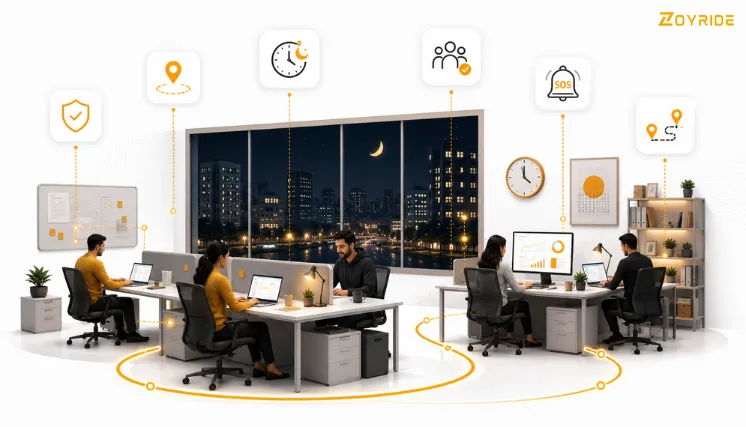
Most employee transport systems are designed for 8:00 AM. The booking flow, notification timing, escalation process, and coordinator availability all assume a daytime context. Then, the exact same system is used to move workforce teams at 2:00 AM—and every workflow that ran smoothly in the morning starts to break down.
Night shift transport is not a quieter version of daytime operations. It operates in a fundamentally different risk environment. Coordinators are off-duty or thinly stretched. Drivers face low-visibility conditions with minimal operational support. Employees waiting for a late-night pickup face safety risks that simply don’t exist at 9:00 AM. When transport communication gaps appear—a delayed notification, an unreachable driver, or an unconfirmed route change—there is no safety net to catch them.
Here is what changes in employee transport workflows after dark and how to adapt your operations to keep night shift employees just as safe and supported as daytime commuters.
The Daytime Assumptions That Break Down at Night
1. Coordinator Availability
During the day, dispatchers actively monitor the dashboard, handle driver calls, and resolve route exceptions in real time. At 2:00 AM, that manual oversight is often absent.
A trip exception caught in four minutes during the day can sit unaddressed for an hour at night if no one is watching. Night shift employee transport workflows must account for this: either dedicated night coverage must be rostered, or system automation must handle exception detection, reassignments, and notifications without human intervention.
2. Employee Communication Expectations
When a daytime commuter experiences transport notification delays, they can check their mobile app, call a coordinator, or flag a colleague. At 2:00 AM, an employee standing alone at an isolated pickup point with no employee pickup updates experiences severe anxiety and elevated safety risks.
The threshold for employee transport communication must be higher at night:
- Earlier, proactive alerts before pickup times.
- Real-time trip update notifications in transport apps.
- Automated escalation paths if an employee does not confirm their pickup.
3. Driver Fatigue and Operational Decision-Making
Road safety research highlights the 2:00 AM to 6:00 AM window as peak hours for fatigue-related incidents—the exact window for night shift drop-offs. Drivers operate in higher-risk conditions with fewer operational resources. Night shift workflows require automated driver check-in protocols, real-time route monitoring for unauthorized stops, and strict rest-break enforcement.
4. Elevated Safety Risk Profile
An employee finishing a shift at 3:30 AM waiting at an unlit pickup location faces security risks far greater than a daytime commuter. Transport managers have a duty of care that extends beyond moving employees from point A to point B—it includes ensuring the pickup experience itself is swift, secure, and clear.
Key Takeaway: Night shift transport is not a scheduling problem. It is a safety problem that happens to involve scheduling.
What Needs to Change in the Workflow
[20-30 Min Before Pickup] ──> [5 Min Away Alert] ──> [Boarding & Confirmed Pickup]
Proactive Driver Details Live ETA Update Automated Admin & Safety Alert
1. Shift from Reactive to Proactive Notifications
Daytime notifications rely on reactive triggers (e.g., driver accepted, trip complete). At night, operations require proactive corporate transport notifications:
- 20–30 Minutes Before Pickup: Alert the employee with driver name, vehicle details, and estimated time of arrival (ETA).
- 5 Minutes Away: Push a direct location update to prepare the employee for boarding.
- Boarding Confirmation: Automatically log when the employee enters the vehicle and share the live status.
2. Automated Escalation Paths Without Coordinators
When an overnight trip hits a bottleneck (e.g., driver cancellation or breakdown), the escalation cannot wait for a dispatcher. The transport platform must handle first-line exceptions automatically:
- Auto-detect vehicle delays or missed check-ins.
- Reassign the trip to the nearest available driver.
- Send updated details to the employee via employee transport trip updates.
- Escalate to an on-call emergency contact only if auto-reassignment fails.
3. Accessible SOS and Safety Features
An in-app SOS button is essential for overnight operations. However, feature availability is not enough:
- Employees must know who the panic button alerts and what emergency protocol triggers.
- Escalations must route to an active 24/7 safety team or designated on-call contact rather than an unmonitored inbox.
- Drivers require a parallel emergency trigger to report incidents instantly.
4. Live Tracking for Emergency Contacts
While live route tracking is standard for commuters, late-night shifts benefit from sharing live trip links with designated emergency contacts (family members or guardians). Modern platforms, including Zoyride’s Employee Transport Management System, include native trip-sharing features to enhance passenger confidence and safety transparency.
5. Standardized Recovery for Communication Failures
When transport communication gaps occur—such as an employee not responding to a driver’s arrival call—use a standardized, automated 3-step recovery workflow:
| Step | Time Trigger | Automated Action |
|---|---|---|
| Step 1 | 0 Min (Pickup Time) | Driver initiates contact attempt via the driver app. |
| Step 2 | +3 Minutes | The system automatically sends a push notification and SMS reminder to the employee. |
| Step 3 | +5 Minutes | The incident is automatically escalated to the on-call safety team for immediate follow-up. |
Eliminating the “Afterthought” Mindset in 24/7 Operations
Companies running 24/7 operations across IT, healthcare, BPO, manufacturing, and logistics often treat night shift transport as a secondary priority due to lower headcount.
However, operational risk accumulates quietly through delayed pickups, unannounced route changes, and inadequate support. Over time, these communication failures erode employee trust and lower retention in critical overnight shifts.
Upgrading night shift mobility does not require a secondary transport ecosystem. It requires configuring your existing Fleet Management Software to match overnight realities—enforcing higher notification standards, automated exception handling, and 24/7 safety protocols.
Final Thoughts
The difference between effective daytime and night shift employee transport comes down to communication, safety, and rapid support availability. Night shift workers deserve the exact same reliability as daytime commuters, adapted to the unique demands of 3:00 AM operations.
Upgrade Your Overnight Commute Experience
See how Zoyride streamlines night shift employee transport with automated scheduling, real-time tracking, proactive alerts, and instant SOS escalations.
Watch a Free Demo | Talk to Our Mobility Experts
Frequently Asked Questions
Why is night shift employee transport harder to manage than daytime transport?
Night shift transport operates in a low-support environment where on-duty coordinators are limited, driver fatigue risks are higher, and communication delays leave employees waiting in isolated settings. Maintaining daytime service standards requires increased workflow automation and proactive safety tools.
What notification changes improve night shift employee pickups?
Proactive alert timing is essential. Transport systems should dispatch an initial notification 20–30 minutes prior to pickup with driver details, followed by a 5-minute approach alert and an instant boarding confirmation once the trip begins.
How should operations handle communication breakdowns without an active coordinator?
Deploy an automated exception recovery workflow. If an employee or driver cannot establish contact at pickup time, automated system alerts should trigger within 3 minutes, escalating to an active on-call manager if unconfirmed after 5 minutes.
What safety features are required for night shift corporate transport?
Overnight operations require driver verification details, live GPS trip tracking with emergency contact sharing, in-app SOS buttons linked to 24/7 monitoring, and automated driver check-ins.