8 Driver App Features That Improve Acceptance Rates
Discover 8 driver app features that improve acceptance rates and help streamline dispatch reduce delays and boost overall fleet performance.
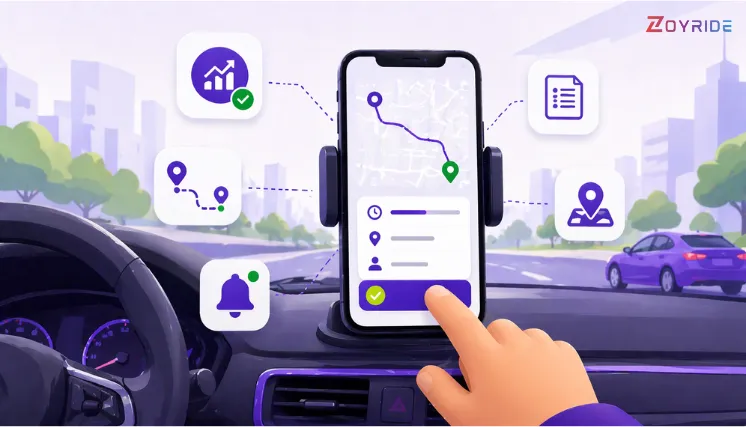
A low driver acceptance rate is one of the quieter problems in taxi fleet management — but the consequences are anything but quiet. Passengers wait longer. Dispatchers reassign trips manually. Drivers sitting idle in one zone decline jobs routed to another. And over time, the gap between trips dispatched and trips actually accepted starts showing up in your revenue.
Most fleet operators focus on the dispatch side of this problem: better algorithms, smarter zone management, surge pricing. These all help. But one factor that often gets overlooked is the driver app itself.
When drivers find their app difficult to use, unclear about trip details, or unreliable during a shift, their default response is to decline and wait. Improving driver trip acceptance in taxi operations isn’t just about incentives — it starts with giving drivers an app that actually works for them.
Here are 8 driver app features that directly influence how often drivers accept trips — and why each one matters to your fleet.
1. Trip Preview Before Acceptance
Ask any experienced taxi driver why they decline certain trips and the answer is usually the same: they didn’t have enough information to say yes confidently.
A trip preview feature shows the driver key details before they have to accept or decline — pickup location, estimated distance to the passenger, drop-off area, and approximate fare. This single change addresses one of the biggest reasons for low driver trip acceptance in taxi fleets: uncertainty.
When drivers can see that a trip is 2 km away with a 14 km drop-off to a familiar destination, they’re far more likely to accept than when they see a generic “New Booking” alert with no context. Transparency before the tap is a basic driver app feature in taxi dispatch software that many platforms still get wrong.
2. In-App Navigation with Route Guidance
Switching between a driver app and a separate navigation app mid-trip is a friction point that adds up across a full shift. A driver managing both simultaneously is distracted, slower, and more likely to miss the next trip alert while focused on finding a turn.
Built-in navigation — integrated directly into the taxi driver app functionality — keeps drivers in a single interface. Turn-by-turn guidance, live traffic updates, and optimized routing mean drivers reach passengers faster and complete trips more efficiently. Faster trip completion means more trips per shift, which makes each acceptance more worthwhile.
For fleet operators, this also reduces the “I missed the pickup location” calls to dispatch, which saves coordinator time and improves passenger experience simultaneously.
3. Earnings Visibility and Per-Trip Breakdown
Driver engagement in a taxi app drops sharply when drivers feel like they’re operating without financial clarity. If a driver accepts 30 trips in a day but can’t easily see their total earnings, pending payouts, or how much a specific trip paid — they lose confidence in the platform.
An earnings dashboard that shows real-time income, per-trip fare breakdown, bonus progress, and payout history gives drivers something concrete to work toward. It also makes it easier for them to evaluate whether accepting a particular trip is worth it based on their shift targets.
This is one of the most underrated driver app features for taxi operators looking to improve acceptance rates. When drivers can see the financial picture clearly, they’re more motivated to stay active and accept consistently.
4. Smart Availability and Shift Management
Driver acceptance rates are also affected by how easy it is for a driver to manage their own availability. If going offline requires multiple steps, or if the app keeps sending trip requests during breaks, drivers start ignoring alerts altogether — which tanks acceptance metrics even when drivers are technically available.
A well-designed taxi driver app should make it simple to toggle between online and offline status, set shift start and end times, and pause notifications during scheduled breaks. When the app respects the driver’s schedule, drivers are more likely to stay active and engaged during the hours they’ve committed to.
This also gives fleet operators cleaner data on actual driver availability, making dispatch allocation more accurate and reducing wasted trip assignments sent to drivers who aren’t ready to work.
5. Ride Queue and Chain Dispatch Visibility
One of the strongest motivators for driver trip acceptance in taxi operations is knowing what comes next. When a driver can see that their next trip is already queued before they’ve dropped off the current passenger, the decision to accept is easy — they’re never sitting idle, and the earnings momentum continues.
Chain dispatch, or queue-based assignment, is a taxi driver app functionality that significantly reduces dead time between trips. Instead of waiting in a parking lot checking the app every few minutes, drivers are already on their way to the next pickup before the current ride ends.
Fleets that implement visible ride queuing report higher acceptance rates and better driver retention — because drivers feel like the platform is working with them, not just sending them random requests.
6. In-App Communication with Passengers
A surprising number of trip declines happen because drivers anticipate a communication problem. A pickup point that looks ambiguous on the map, an address in a complex or gated area, or a passenger who isn’t responding — these are situations drivers prefer to avoid by declining upfront.
In-app calling and messaging, directly within the taxi driver app, removes this barrier. Drivers can contact the passenger without leaving the app, clarify the pickup location quickly, and proceed with confidence. For passengers, it also means no personal number is shared, which improves both safety and trust.
This feature directly reduces trip declines driven by location uncertainty — one of the more common but rarely measured causes of low acceptance rates.
7. Performance Tracking and Ratings Feedback
Drivers who understand how they’re performing are more engaged with the platform. A driver app that surfaces acceptance rate, trip completion rate, average ratings, and feedback from passengers gives drivers actionable information rather than abstract scores.
This matters for driver engagement in the taxi app context because drivers who can see their own metrics are more likely to actively manage them — which means maintaining high acceptance to protect their standing, access better trip allocations, or qualify for performance bonuses.
Transparent performance data also shifts the conversation between fleet managers and drivers from subjective to objective. When a driver can see why their acceptance rate has dropped, it’s easier to course-correct.
8. Offline Mode and Low-Connectivity Reliability
In dense urban areas, dead zones, basement parking lots, or areas with weak signals, a driver app that behaves unpredictably is a serious operational problem. Trips that don’t load, maps that freeze, or acceptance confirmations that don’t register force drivers to decline out of technical frustration rather than actual unwillingness.
A reliable driver app with offline functionality — where cached route data, passenger contact details, and trip information remain accessible even when connectivity dips — ensures drivers can operate without interruption. When drivers trust that the app will work, they engage with it more consistently.
This is one of the less glamorous but genuinely critical driver app features for taxi operations running across mixed-connectivity environments, which includes most real-world city deployments.
Why Driver App Design Directly Affects Fleet Performance
Acceptance rate is ultimately a trust metric. When drivers trust that a trip is worth taking, that the app will support them through it, and that the platform is working in their interest — they accept. When that trust breaks down at any point, they decline.
The 8 features above aren’t just UX improvements. Each one removes a specific friction point that causes drivers to second-guess an acceptance. Taken together, they create a driver app experience that makes staying active and accepting trips the path of least resistance.
For fleet operators, the business case is straightforward: higher acceptance rates mean fewer reassignments, shorter passenger wait times, higher trip completion, and better driver retention. The app your drivers use every day is one of the highest-leverage tools you have.
Ready to see it in action?
Sign up for a free trial of Zoyride — no credit card required.
FAQs
Q1. What is a good driver acceptance rate for a taxi fleet?
A healthy acceptance rate varies by market, but most well-run taxi fleets target 80% or above. Rates consistently below 70% typically indicate problems with trip assignment logic, driver app usability, or incentive structure — all of which are worth investigating separately.
Q2. How do driver app features affect acceptance rates?
Driver app features directly affect how much information and confidence a driver has before accepting a trip. Features like trip previews, in-app navigation, and earnings visibility remove the uncertainty that leads to declines. Better taxi driver app functionality means drivers spend less time second-guessing and more time accepting.
Q3. Can trip preview features reduce driver cancellations too?
Yes. When drivers have better information before accepting, they’re less likely to accept and then cancel after seeing details they didn’t expect. Trip previews reduce both pre-acceptance declines and post-acceptance cancellations.
Q4. What’s the relationship between driver engagement and acceptance rates?
Driver engagement in a taxi app — how actively a driver interacts with the platform, checks earnings, and manages their availability — is closely linked to acceptance behavior. Engaged drivers tend to have higher acceptance rates because they’re invested in their performance on the platform.
Q5. Should taxi operators choose software based on driver app quality?
Absolutely. The passenger app gets a lot of attention, but the driver app runs every trip from the inside. Weak taxi driver app functionality — poor navigation, unreliable connectivity, unclear trip information — directly increases friction and lowers operational efficiency. Driver app quality should be a primary evaluation criterion when choosing taxi software.