7 Signs Your Employee Transport Operation Needs Automation
Spot the signs that your employee transport operation has outgrown manual processes, from missed pickups and scheduling issues to rising costs and limited visibility.
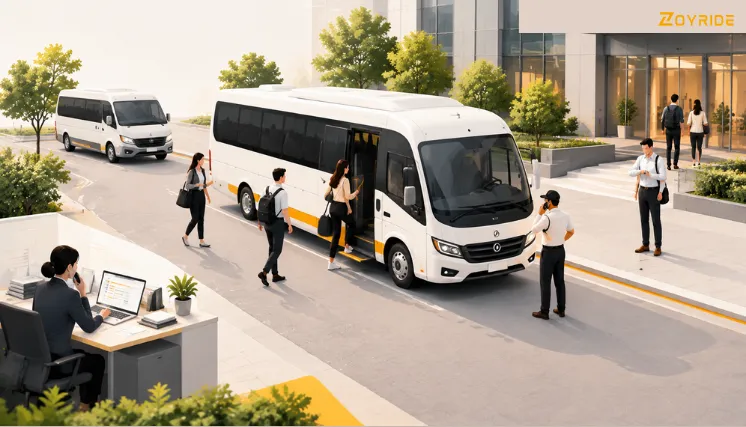
Most employee transport operations don’t set out to run on spreadsheets and phone calls. They start small — a handful of vehicles, a few dozen employees, one shift — and manual coordination works fine. The trouble is, that same process rarely scales cleanly. Routes get added, shifts multiply, and what used to take an hour to plan starts eating most of someone’s day.
The signs that a transport operation has outgrown manual management are usually visible well before anyone decides to fix them. Here are seven of the clearest ones — and what tends to change once a business brings in employee transport software to handle the parts that no longer belong on a spreadsheet.
1. Routes Are Still Planned by Hand Every Day
If someone on your team is manually assigning pickups to vehicles each morning — juggling shift timings, employee addresses, and vehicle capacity in a spreadsheet — that process gets harder every time headcount grows. A plan that works for 100 employees across two shifts becomes a different problem entirely at 500 employees across four.
Manual route planning also has no memory. Every day starts from a blank sheet, even though most of the underlying data — employee addresses, shift patterns, vehicle capacity — barely changes week to week.
2. Your Team Spends More Time Firefighting Than Planning
If HR or admin staff spend their mornings fielding “where’s my cab” calls instead of doing anything strategic, that’s a sign the operation is running reactively. Reactive transport management tends to stay reactive — there’s rarely time to step back and fix the root cause when you’re busy handling today’s fires.
3. There’s No Real-Time Visibility Into Vehicles or Employees
Not knowing where a vehicle is until someone calls to ask is a common gap in manual operations. Without real-time tracking, a delayed pickup, a wrong turn, or a breakdown often isn’t caught until an employee is already late or hasn’t been picked up at all — and by then, there’s little anyone can do except apologize.
4. Employees Regularly Complain About Delays or Uncertainty
A pattern of complaints about late pickups, no-shows, or simply not knowing when a cab will arrive is usually a process problem, not a driver problem. Employees who can’t rely on their commute tend to notice — and repeated friction here affects morale in a way that’s easy to underestimate until it shows up in exit interviews.
5. Billing and Vendor Reconciliation Take Days Every Month
Manually reconciling trip logs, vendor invoices, and shift schedules at the end of every month is time-consuming and error-prone, especially across multiple vendors or office locations. If your team dreads month-end transport billing, that’s a strong sign the underlying data isn’t centralized anywhere useful.
6. Safety Gaps Go Unnoticed Until Something Goes Wrong
Verifying drivers, tracking routes for unplanned diversions, and giving employees a way to raise an alert during a trip are hard to do consistently by hand. Many operations only discover a safety gap after an incident — a missed detour, an unverified driver, a delayed response to an emergency — rather than catching it in real time.
7. Growth Keeps Breaking the Current Process
A process that works at one office location or one shift pattern often doesn’t hold up once a business adds a second location, a night shift, or a new vendor. If every bit of growth means rebuilding the transport process from scratch, that’s less a scaling problem and more a sign the underlying tooling hasn’t kept pace with the business.
What Changes When You Automate
None of these seven signs are really about any one bad day — they’re about a process that was built for a smaller, simpler operation and hasn’t been revisited since. Employee transport software addresses each of them directly: automated route planning that accounts for shift patterns and vehicle capacity, real-time GPS tracking so nobody has to ask where a vehicle is, centralized billing across vendors, and safety features like driver verification and in-trip alerts.
The point isn’t to replace judgment with automation everywhere. It’s to stop spending manual effort on the parts of the process that are repetitive and rule-based, so your team has time for the parts that actually need a person’s attention.
Conclusion
Manual employee transport management usually works — right up until it doesn’t. The seven signs above tend to show up gradually, which is exactly why they’re easy to live with for longer than they should be.
If more than a couple of these sound familiar, it’s worth looking at what a dedicated platform would actually change in your day-to-day operations before the next round of growth makes the gap harder to close.
See how Zoyride’s employee transport software handles routing, tracking, and billing in one platform. Explore the Employee Transport Solution →
Frequently Asked Questions
How do I know if my employee transport operation needs automation?
If your team is manually planning routes every day, fielding frequent complaints about delays, or spending days each month on billing reconciliation, those are strong signs the process has outgrown manual management.
Is this kind of automation only useful for large companies?
No. Smaller operations benefit from fewer scheduling errors and less manual coordination, while larger ones gain the scalability and reporting needed to manage transport across multiple locations and shifts.
What’s the first thing to automate in an employee transport operation?
Route planning and real-time tracking tend to have the most immediate impact, since they remove the two most time-consuming manual tasks — assigning vehicles and answering “where is it” questions.
Does automating employee transport reduce costs?
It can, mainly by reducing inefficient routing, cutting the admin time spent on manual coordination, and making billing errors easier to catch. The exact savings depend on fleet size and how manual the current process is.