AI Dispatch vs Manual Dispatch: Which Delivers Better Operational Results?
Compare AI dispatch and manual dispatch to see which delivers better operational results through faster trip allocation, improved fleet efficiency, and lower operating costs.
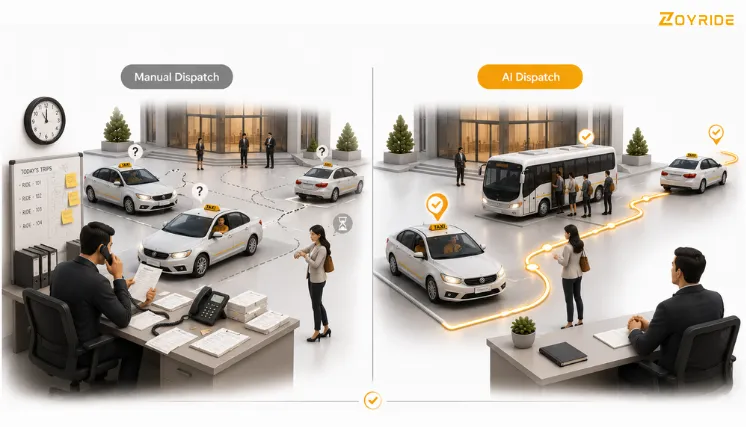
For decades, the dispatch desk was the central nerve center of any taxi or corporate transport operation. Experienced dispatchers relied on memory, wall maps, whiteboards, and phone calls to coordinate drivers, assign rides, and troubleshoot delays.
While manual dispatch built the foundation of the passenger transport industry, modern fleets operate under a completely different set of pressures. Customers expect instant confirmations, driver ETAs measured in seconds, and total visibility. At the same time, fleet owners face rising fuel costs, tight driver schedules, and razor-thin operating margins.
This operational pressure has brought AI dispatch and automated dispatch systems to the forefront. But does replacing human judgment with dispatch automation actually deliver superior business results?
Here is a comprehensive breakdown of manual dispatch versus intelligent dispatch systems—and what making the switch means for your fleet’s efficiency, costs, and bottom line.
The Cognitive Limits of Manual Taxi Dispatch
Manual dispatch relies entirely on human cognition and physical speed. A skilled dispatcher knows local traffic bottlenecks, driver habits, and geographic shortcuts. However, as trip volumes grow, manual coordination encounters natural physical and operational limits:
- Cognitive Overload: A dispatcher managing 5 to 10 active vehicles can make smart, nuanced choices. A dispatcher trying to balance 30, 50, or 100 simultaneous bookings across shifting traffic conditions is forced to make quick guesses under high stress.
- Single-Variable Selection: Humans usually assign rides based on one primary metric—proximity (who is geographically closest on a map). They cannot simultaneously calculate vehicle heading angle, remaining driver shift hours, returning outstation trips, or live traffic conditions across the entire city.
- Peak-Hour Bottlenecks: During sudden demand spikes, bad weather, or rush hours, manual dispatch slows down dramatically. Pickup ETAs stretch, phone lines get jammed, customer cancellation rates spike, and dispatchers burn out.
What Intelligent Dispatch Does Differently
An intelligent dispatch platform does not rely on quick guesses or static proximity rules. Instead, dispatch automation processes dozens of dynamic variables in parallel within milliseconds to make mathematically optimal assignment decisions.
Multi-Variable Matching
When a booking enters the system, an AI dispatch engine instantly evaluates:
- Live GPS coordinates and exact vehicle heading vector
- Real-time traffic congestion, construction delays, and alternative routes
- Driver shift availability, legal duty-hour limits, and breaks
- Vehicle category, seating capacity, and fuel/EV charge levels
- Downstream trip-chaining possibilities
Proactive Route and Zone Balancing
Instead of waiting for bookings to arrive and reacting to them, automated dispatch analyzes historical demand patterns to predict booking clusters. The system pre-positions available drivers toward high-volume zones, drastically reducing customer wait times and unbillable dead-mile driving.
Frictionless Trip Chaining
Manual dispatch often leaves drivers idle between completed trips. Intelligent dispatch chains rides seamlessly—assigning a driver’s next pickup near their drop-off point before the current passenger even steps out of the car.
Side-by-Side Comparison: AI Dispatch vs. Manual Dispatch
The operational differences between traditional dispatching and dispatch automation show up clearly when looking at core fleet metrics:
| Operational Metric | Manual Taxi Dispatch | Intelligent AI Dispatch | Operational Impact |
|---|---|---|---|
| Dispatch Speed | 1–3 minutes per trip (slower during peak demand) | < 5 seconds per assignment (near-instant during peak demand) | Eliminates booking bottlenecks during high-demand hours. |
| Variable Processing | 1–2 metrics (typically basic proximity) | 50+ real-time variables processed simultaneously | Delivers more optimal driver-to-trip assignments. |
| Route Optimization | Static routes or standard GPS navigation | Dynamic route optimization using live traffic data | Can help reduce fuel consumption and travel time. |
| Fleet Scalability | Typically requires one dispatcher per 10–12 vehicles | Enables one dispatcher to oversee 35–50+ vehicles | Supports fleet growth with fewer manual interventions. |
| Dead Mileage Ratio | Higher due to frequent empty return trips | Reduced through intelligent trip chaining | Increases productive driving time and fleet utilization. |
| Exception Handling | 15–30 minutes of manual reassignment and coordination | Automated reassignment within 30–90 seconds | Helps maintain service continuity during disruptions. |
The Measurable Operational Impact
Switching from manual oversight to an automated dispatch workflow yields clear performance improvements across your entire business:
- Lower Fuel & Maintenance Costs: Optimized routing and trip-chaining eliminate unnecessary drive time, lowering fuel costs and reducing vehicle wear and tear.
- Shorter Passenger ETAs: Automated matching cuts pickup wait times, improving customer satisfaction, driver ratings, and rider retention.
- Higher Vehicle Utilization: Vehicles complete more trips per shift because non-revenue waiting periods between drop-offs and new assignments are virtually eliminated.
- Higher Dispatcher Efficiency: Dispatchers shift from taking calls and making repetitive manual assignments to managing high-level logistics and resolving edge cases.
The Hybrid Model: Empowering Human Dispatchers
Adopting AI Taxi dispatch software does not mean removing human dispatchers. The most successful fleets use dispatch automation to transform the dispatcher’s role from a reactive operator into a proactive fleet manager.
By letting the intelligent dispatch system handle 90% of routine, high-volume assignments automatically, your human team can focus on what requires real human judgment:
- Managing high-priority corporate accounts and VIP clients.
- Handling complex emergencies, accidents, or extreme weather events.
- Coaching drivers on performance and building strong driver relationships.
- Resolving operational edge cases flagged by the system.
Final Thoughts
While manual coordination built the transport industry, today’s market conditions demand a level of speed, data processing, and routing precision that human effort alone cannot match.
An AI dispatch system removes manual bottlenecks, reduces dead miles, lowers fuel costs, and delivers the fast, predictable service modern passengers expect. Transitioning to automated dispatch technology gives fleet operators the foundation needed to scale efficiently and profitably.
Transform Your Fleet Operations
Discover how Zoyride’s intelligent Taxi Dispatch Software and automated Fleet Management System streamline trip allocation and boost operational productivity.
View Demo | Talk to Our Mobility Specialists
Frequently Asked Questions
What is the main difference between AI dispatch and standard automated dispatch?
Standard automated dispatch uses simple static rules, such as assigning the closest idle driver. AI dispatch continuously analyzes dozens of dynamic variables in real time—including live traffic, driver heading, shift limits, vehicle class, and demand predictions—to make optimal assignments.
Can AI dispatch software integrate with existing fleet management systems?
Yes. Modern intelligent dispatch software connects directly with existing passenger apps, driver mobile devices, GPS units, and billing portals through secure APIs.
Will dispatch automation replace human fleet dispatchers completely?
No. Dispatch automation handles routine, repetitive trip assignments automatically. This allows human dispatchers to focus on managing exceptions, handling customer service escalations, and overseeing overall fleet strategy.
How quickly can a fleet see results after switching to AI dispatch?
Most fleet operators observe immediate reductions in pickup ETAs and customer wait times within the first week. Fuel savings, idle time reductions, and administrative efficiency gains typically become measurable within 30 to 90 days.