Apa Penyebab Penjemputan Terlewatkan di Sistem Transportasi Karyawan
Temukan penyebab sebenarnya di balik penjemputan yang terlewat dalam sistem transportasi karyawan dan bagaimana penjadwalan dan otomatisasi yang cerdas dapat mencegah penundaan transportasi karyawan.
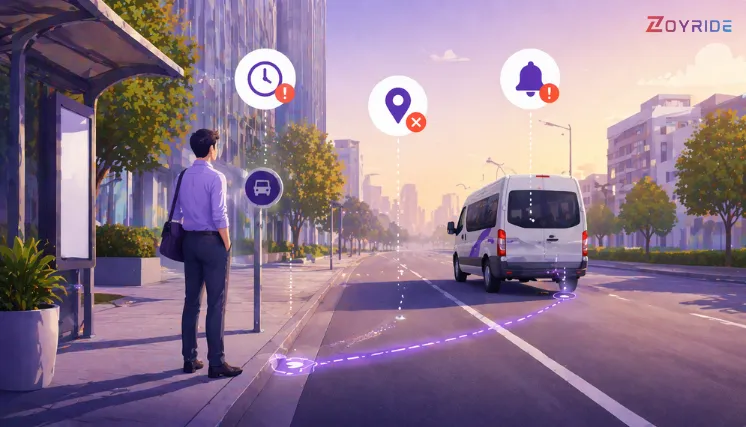
Sekarang jam 8:47 pagi. Seorang karyawan berdiri di titik penjemputan, memanggil koordinator transportasi. Kendaraan itu tidak pernah datang. Tidak ada peringatan, tidak ada pembaruan, tidak ada penjelasan. Saat situasi teratasi, mereka melewatkan pengarahan pagi hari — dan koordinator masih menunggu lima panggilan serupa.
Penjemputan yang terlewat dalam sistem transportasi karyawan lebih sering terjadi daripada yang diakui sebagian besar organisasi. Hal ini bukan hanya menimbulkan ketidaknyamanan — hal ini juga mengikis kepercayaan karyawan, mengganggu produktivitas, dan menciptakan efek riak pada jadwal shift dan operasional armada.
Bagian yang membuat frustrasi? Sebagian besar masalah penjemputan yang terlewat dalam transportasi dapat dicegah. Hal ini berasal dari kegagalan yang spesifik dan dapat diidentifikasi — dalam penjadwalan, komunikasi, data, dan koordinasi. Memahami akar permasalahan ini adalah langkah pertama untuk menghilangkannya.
1. Data Daftar Pemain Kedaluwarsa atau Tidak Akurat
Salah satu penyebab kegagalan pengambilan karyawan yang paling umum — dan dapat dihindari — adalah bekerja dari daftar karyawan yang sudah ketinggalan zaman. Saat HR memperbarui waktu shift atau karyawan mengubah lokasi penjemputan mereka, informasi tersebut tidak selalu sampai ke tim transportasi tepat waktu.
Hasilnya: kendaraan muncul di alamat yang salah, di waktu yang salah, atau di depan karyawan yang sakit tiga jam yang lalu. Masalah penjadwalan transportasi seperti ini semakin bertambah dengan cepat — terutama bagi perusahaan yang mengelola ratusan perjalanan harian dalam berbagai shift.
Yang biasanya rusak di sini:
- Perubahan shift dikomunikasikan melalui WhatsApp atau email, tidak disinkronkan ke sistem transportasi
- Pembaruan WFH atau cuti tidak tercermin dalam rencana rute harian
- Perubahan alamat penjemputan karyawan diperbarui secara manual — terkadang terlambat
Cara mengatasinya terletak pada mengintegrasikan HRMS Anda dengan platform manajemen transportasi sehingga pembaruan daftar pemain, tugas shift, dan data kehadiran secara otomatis tercermin dalam perencanaan rute — tanpa penyerahan manual apa pun.
2. Penjadwalan Manual yang Tidak Berskala
Banyak organisasi masih membuat jadwal perjalanan harian secara manual — koordinator transportasi bekerja melalui spreadsheet, panggilan telepon, dan rangkaian pesan untuk menetapkan kendaraan dan pengemudi pada hari itu. Pendekatan ini memiliki batasan yang rendah.
Saat Anda mengelola 20 karyawan, hal itu dapat dikelola. Saat Anda mengelola 200 orang dalam empat shift dan beberapa zona penjemputan, penjadwalan manual menjadi sumber penundaan transportasi perusahaan. Satu pembaruan yang terlewat, entri yang salah, atau shift larut malam yang terlewat dapat mengakibatkan karyawan tidak memiliki kendaraan yang ditugaskan.
Proses manual juga mengalami kesulitan dengan perubahan di menit-menit terakhir. Jika seorang pengemudi menelepon karena sakit pada pukul 6 pagi dan tugas pencadangan harus dilakukan melalui telepon, ada kemungkinan besar ada seseorang yang tertinggal — dan tidak ada peringatan tingkat sistem yang dapat mendeteksinya.
Penjadwalan otomatis menghilangkan kerapuhan ini. Ketika sistem menetapkan kendaraan dan pengemudi berdasarkan ketersediaan waktu nyata, logika rute, dan data shift, ruang untuk kesalahan manusia menyempit secara signifikan.
3. Tidak Ada Visibilitas Real-Time untuk Karyawan atau Koordinator
Pickup yang ketinggalan tidak selalu dimulai dengan kendaraan yang tidak pernah meninggalkan depo. Terkadang kendaraan terlambat 20 menit karena kemacetan, namun tidak ada yang mengkomunikasikan hal ini kepada karyawan yang menunggu di titik penjemputan. Setelah 10 menit tanpa kabar terbaru, karyawan tersebut memanggil taksi. Perusahaan kini telah membayar kedua perjalanan tersebut.
Keterlambatan transportasi karyawan sering kali dianggap sebagai penjemputan yang terlewat hanya karena komunikasi yang buruk. Ketika karyawan tidak dapat melacak taksi mereka secara real-time atau menerima ETA yang akurat, ketidakpastian mengisi kesenjangan tersebut — dan mereka mengambil tindakan.
Kesenjangan visibilitas yang menyebabkan hal ini:
- Karyawan tidak memiliki aplikasi atau antarmuka untuk melacak kendaraan yang ditugaskan kepada mereka
- Koordinator tidak dapat melihat perjalanan mana yang berjalan sesuai rencana dan perjalanan mana yang tertinggal
- Pengemudi tidak mempunyai cara untuk menandai penundaan atau mengubah rute secara proaktif
Pelacakan real-time — dapat diakses oleh karyawan, pengemudi, dan koordinator secara bersamaan — menutup kesenjangan ini. Ketika semua orang dapat melihat gambaran yang sama, waktu respons akan meningkat dan eskalasi yang tidak perlu akan berkurang.
4. Rute yang Tidak Direncanakan dengan Terlalu Banyak Perhentian
Rute yang kelebihan muatan merupakan penyebab hilangnya penjemputan yang jarang dibicarakan oleh tim transportasi karyawan. Ketika satu kendaraan ditugaskan 12 perhentian di wilayah geografis yang luas, rute tersebut rapuh sejak awal. Satu penundaan lalu lintas di awal perjalanan mengakibatkan jendela terlewatkan bagi setiap karyawan yang datang setelahnya.
Hal ini terutama terjadi pada shift pagi atau larut malam, dimana rentang waktu yang sempit dan prediktabilitas lalu lintas yang rendah menjadikan penyangga rute menjadi sangat penting. Seorang karyawan yang dijadwalkan untuk pemberhentian kesembilan pada suatu rute hampir tidak memiliki margin untuk kesalahan.
Pengoptimalan rute yang cerdas memperhitungkan data lalu lintas nyata, lokasi karyawan, jangka waktu penjemputan, dan kapasitas kendaraan — bukan hanya jarak garis lurus. Rute yang dibangun dengan cara ini lebih tangguh dan kecil kemungkinannya untuk menghasilkan pemberhentian yang terlambat atau terlewat di bagian selanjutnya.
5. Masalah Sisi Pengemudi Tanpa Akuntabilitas Sistem
Terkadang penyebab kegagalan penjemputan oleh karyawan lebih sederhana: pengemudi tidak mengikuti rute yang ditentukan, melewatkan perhentian karena salah membaca alamat, atau tidak pernah menerima rincian perjalanan terbaru setelah perubahan pada menit-menit terakhir.
Tanpa aplikasi yang dapat diakses oleh pengemudi yang memberikan petunjuk perjalanan langsung, navigasi belokan demi belokan, dan konfirmasi pemberhentian, tidak ada cara yang dapat diandalkan untuk mengetahui apakah pengemudi menyelesaikan setiap pengambilan sesuai yang ditugaskan. Koordinator dibiarkan mengejar konfirmasi setelah kejadian tersebut.
Fitur akuntabilitas pengemudi — konfirmasi pemberhentian, peringatan pembatasan wilayah, dan visibilitas lokasi secara real-time — memberikan manajer transportasi alat untuk mengetahui masalah yang terjadi, bukan setelah karyawan berhenti menunggu.
6. Tidak Ada Sistem Peringatan atau Eskalasi untuk Penundaan
Di sebagian besar organisasi yang berulang kali mengalami masalah transportasi karyawan, tidak ada mekanisme otomatis yang menandai perjalanan sebagai berisiko sebelum terjadi penjemputan yang terlewat. Saat koordinator mengetahuinya, jendela penjemputan sudah hilang.
Sistem transportasi karyawan yang efektif harus memicu peringatan ketika kendaraan berjalan jauh terlambat dari jadwal kedatangannya, ketika pengemudi belum memulai perjalanan dalam jangka waktu yang diharapkan, atau ketika seorang karyawan belum dipastikan dijemput melewati titik tertentu. Eskalasi otomatis ini memungkinkan koordinator untuk melakukan intervensi lebih awal — menugaskan ulang kendaraan, memberi tahu karyawan, atau menyesuaikan rute — sebelum situasinya menjadi penjemputan yang terlewat.
7. Beban Kerja Koordinator Tinggi Tanpa Dukungan Pengambilan Keputusan
Seorang koordinator transportasi yang mengelola 15 perjalanan secara bersamaan, menangani panggilan masuk, dan memperbarui spreadsheet secara paralel beroperasi di batas kemampuan manusia. Di bawah beban seperti ini, banyak hal yang terlewatkan — bukan karena kelalaian, namun karena alat tidak mendukung kompleksitas pekerjaan.
Keterlambatan transportasi perusahaan dan penjemputan yang terlewat sering kali mencerminkan masalah desain sistem, bukan masalah sumber daya manusia. Ketika koordinator dilengkapi dengan dasbor pusat yang menunjukkan status perjalanan langsung, peringatan pengecualian, dan alat tindakan cepat, mereka dapat mengelola lebih banyak perjalanan dengan lebih sedikit kesalahan.
Bagaimana Sistem Transportasi Karyawan yang Cerdas Mencegah Penjemputan yang Terlewatkan
Mengatasi masalah pengambilan yang terlewat dalam transportasi tidak memerlukan perbaikan setiap kegagalan satu per satu. Pendekatan yang lebih berkelanjutan adalah membangun sistem yang terhubung di mana data mengalir secara otomatis, pengecualian ditandai secara real-time, dan baik pengemudi maupun karyawan memiliki informasi yang mereka perlukan.
Secara khusus, itu berarti:
- Pendaftaran nama yang terintegrasi dengan HRMS sehingga perubahan shift dan pembaruan kehadiran mencapai platform transportasi secara otomatis
- Penjadwalan perjalanan otomatis yang menetapkan pengemudi dan kendaraan berdasarkan ketersediaan langsung, bukan pencarian manual
- Pelacakan real-time untuk karyawan dan koordinator sehingga penundaan dapat terlihat sebelum terjadi penjemputan yang terlewat
- Rute yang dioptimalkan dengan buffer waktu yang memperhitungkan kondisi lalu lintas dan urutan penjemputan
- Aplikasi sisi pengemudi dengan konfirmasi berhenti untuk memastikan setiap pengambilan telah selesai dan dicatat
- Peringatan penundaan otomatis yang terpicu jauh sebelum masalah penjadwalan transportasi menjadi masalah karyawan
Pemikiran Akhir
Pengambilan yang terlewat jarang terjadi secara acak. Hal ini merupakan keluaran yang dapat diprediksi dari kesenjangan dalam data, proses, atau visibilitas – kesenjangan yang terjadi di sebagian besar operasi transportasi yang dibangun berdasarkan koordinasi manual. Setelah Anda mengidentifikasi di mana letak kesenjangan tersebut, jalan untuk memperbaikinya menjadi jelas.
Perusahaan-perusahaan yang sudah tidak lagi mengalami masalah transportasi karyawan tidak melakukan sesuatu yang luar biasa. Mereka cukup menghubungkan sistem mereka, mengotomatisasi rutinitas, dan memberikan koordinator visibilitas untuk bertindak sebelum terjadi kesalahan.
Jika penjemputan yang terlewat merupakan masalah yang berulang di organisasi Anda, Solusi Transportasi Karyawan Zoyride dibuat untuk mengatasi titik kegagalan operasional ini — mulai dari sinkronisasi daftar nama dan perutean cerdas hingga pelacakan real-time dan akuntabilitas pengemudi. Sebaiknya jelajahi seperti apa pengaturan yang lebih terhubung untuk armada Anda.
Tanya Jawab
Pertanyaan 1. Apa penyebab paling umum dari kesalahan pengambilan pada angkutan karyawan?
Penyebab paling umum termasuk data daftar pemain yang ketinggalan jaman, kesalahan penjadwalan manual, kurangnya pelacakan waktu nyata, rute yang kelebihan beban, dan tidak ada peringatan otomatis untuk penundaan. Sebagian besar masalah penjemputan yang terlewat dalam transportasi disebabkan oleh terputusnya data dan proses koordinasi manual.
Q2. Bagaimana penundaan transportasi karyawan mempengaruhi produktivitas?
Keterlambatan transportasi karyawan berdampak langsung pada ketepatan waktu, terutama untuk operasional berbasis shift. Kedatangan yang terlambat mempengaruhi serah terima tim, jadwal produksi, dan semangat kerja karyawan. Penundaan transportasi perusahaan yang berulang juga meningkatkan ketidakpuasan dan pengurangan karyawan.
Q3. Apakah masalah penjadwalan transportasi dapat dicegah dengan perangkat lunak?
Ya. Masalah penjadwalan transportasi berkurang secara signifikan ketika organisasi menggunakan penjadwalan otomatis yang dikaitkan dengan daftar nama dan data kehadiran langsung. Pengiriman berbasis perangkat lunak menghilangkan kesalahan manual yang menyebabkan sebagian besar kegagalan penjemputan karyawan.
Q4. Apa peran pelacakan real-time dalam mengurangi pengambilan yang terlewat?
Pelacakan real-time memberikan visibilitas kepada karyawan mengenai ETA kabin, yang mencegah eskalasi yang tidak perlu ketika kendaraan berjalan sedikit terlambat. Bagi koordinator, ini berarti pengawasan langsung terhadap semua perjalanan aktif — sehingga masalah dapat diatasi sebelum karyawannya terbengkalai.
Q5. Bagaimana seharusnya perusahaan menangani perubahan shift di menit-menit terakhir dalam sistem transportasi mereka?
Pendekatan yang paling dapat diandalkan adalah integrasi HRMS — di mana pembaruan shift dan perubahan kehadiran secara otomatis disinkronkan ke platform transportasi. Hal ini menghilangkan ketergantungan pada komunikasi manual dan memastikan perjalanan yang tepat direncanakan untuk karyawan yang tepat setiap hari.