How HRMS Integration Helps Manage Corporate Transport Clients
Discover how HRMS integration simplifies managing corporate transport clients, automates employee transport workflows, and improves operational efficiency.
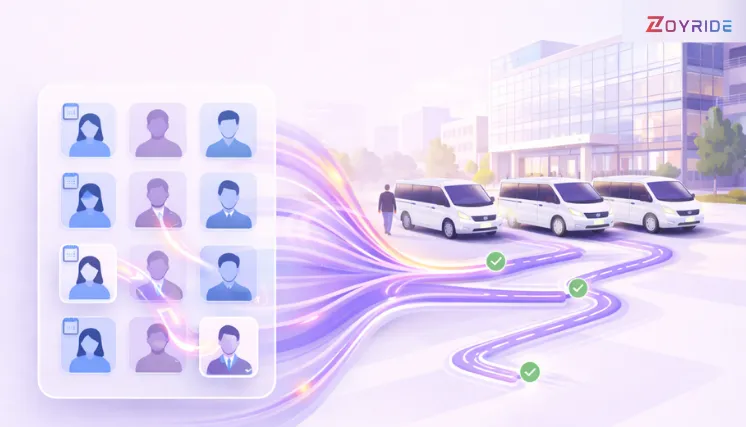
Managing corporate transport clients is not just about assigning vehicles—it’s about coordinating employee data, shift timings, and daily commute requirements without errors.
In many organizations, HR teams manage employee information and shifts in one system, while transport operations are handled separately. This disconnect often leads to delays, manual errors, and unnecessary coordination.
This is where HRMS integration for corporate transport makes a real difference. By connecting HR systems with a transport platform, businesses can automate data flow and improve overall efficiency.
Let’s understand how this integration simplifies operations for both transport providers and corporate clients.
Why Corporate Transport Needs HRMS Integration
Without integration, transport teams rely on spreadsheets or manual updates shared by HR teams. This creates common issues like:
- Repeated data entry
- Outdated employee information
- Errors in shift-based scheduling
- Delays in updating transport routes
With HRMS shuttle integration, employee data and shift schedules sync automatically, reducing manual effort and improving accuracy.
1. Automatic Employee Data Sync
When HRMS is connected to an employee transport management system, key employee details are updated automatically, such as:
- Employee name and ID
- Office location
- Department
- Shift timings
This ensures transport teams always work with the latest data, without depending on manual updates.
2. Seamless Shift-Based Scheduling
For companies operating in multiple shifts, managing employee transport manually can become complicated.
With HRMS integration:
- Shift updates reflect automatically in the system
- Transport teams can plan routes based on real-time data
- Last-minute changes are handled more efficiently
This improves scheduling accuracy and reduces confusion in daily operations.
3. Better Corporate Shuttle Management
Handling multiple corporate clients means dealing with different employee lists, rules, and schedules.
An integrated system improves corporate shuttle management by:
- Organizing employee data company-wise
- Maintaining updated shift schedules
- Simplifying trip planning for large employee groups
This helps operators manage multiple corporate accounts without operational overlap.
4. Reduced Manual Coordination
HR and transport teams often spend time sharing files, updating changes, and confirming schedules.
With HRMS integration corporate transport, this coordination becomes automated. Data flows directly between systems, reducing dependency on emails, calls, and spreadsheets.
5. Improved Visibility and Reporting
With integrated systems, both HR and transport teams get better insights into operations.
Using corporate commute management software, they can:
- Track employee ride usage
- Monitor pickup and drop efficiency
- Analyze travel patterns
This supports better planning and improves overall employee travel management.
Conclusion
Managing corporate transport becomes much easier when HR and transport systems are connected. Instead of relying on manual updates, businesses can automate data flow, improve scheduling, and reduce errors.
For transport operators and companies alike, HRMS integration for corporate transport creates a more reliable and efficient way to manage employee commutes at scale.
Want to simplify corporate transport for your clients?
View a demo of Zoyride and see how HRMS integration improves efficiency across your operations.
FAQ
Q1. Will I need to change my existing HRMS to integrate with transport software?
No. Most platforms support integration with existing HR systems, so there’s no need to switch your current setup.
Q2. What if employee data is updated frequently in the HR system?
The integration ensures that updates like shift changes or employee additions are reflected automatically in the transport system.
Q3. Is this useful only for large companies?
It’s most beneficial for companies with large or shift-based workforces, but even mid-sized organizations can reduce manual effort significantly.
Q4. Can transport operators handle multiple companies with HRMS integration?
Yes. Operators can manage multiple corporate clients, each with their own employee data and schedules, within one system.
Q5. Does HRMS integration reduce coordination between HR and transport teams?
Yes. Since data syncs automatically, there’s less need for manual sharing and follow-ups, making operations smoother.